


Sweatsuit Manufacturing: A Complete Guide to Design and Production

A coordinated sweatsuit looks simple, but making a comfortable, durable set takes careful decisions at every stage. The sweatshirt and pants must work together in fabric, color, fit, and finish, while each garment still needs its own pattern, measurements, and quality checks. Whether you are developing a private-label collection or planning a first apparel range, understanding the production process helps you ask better questions, manage samples, and avoid preventable delays.


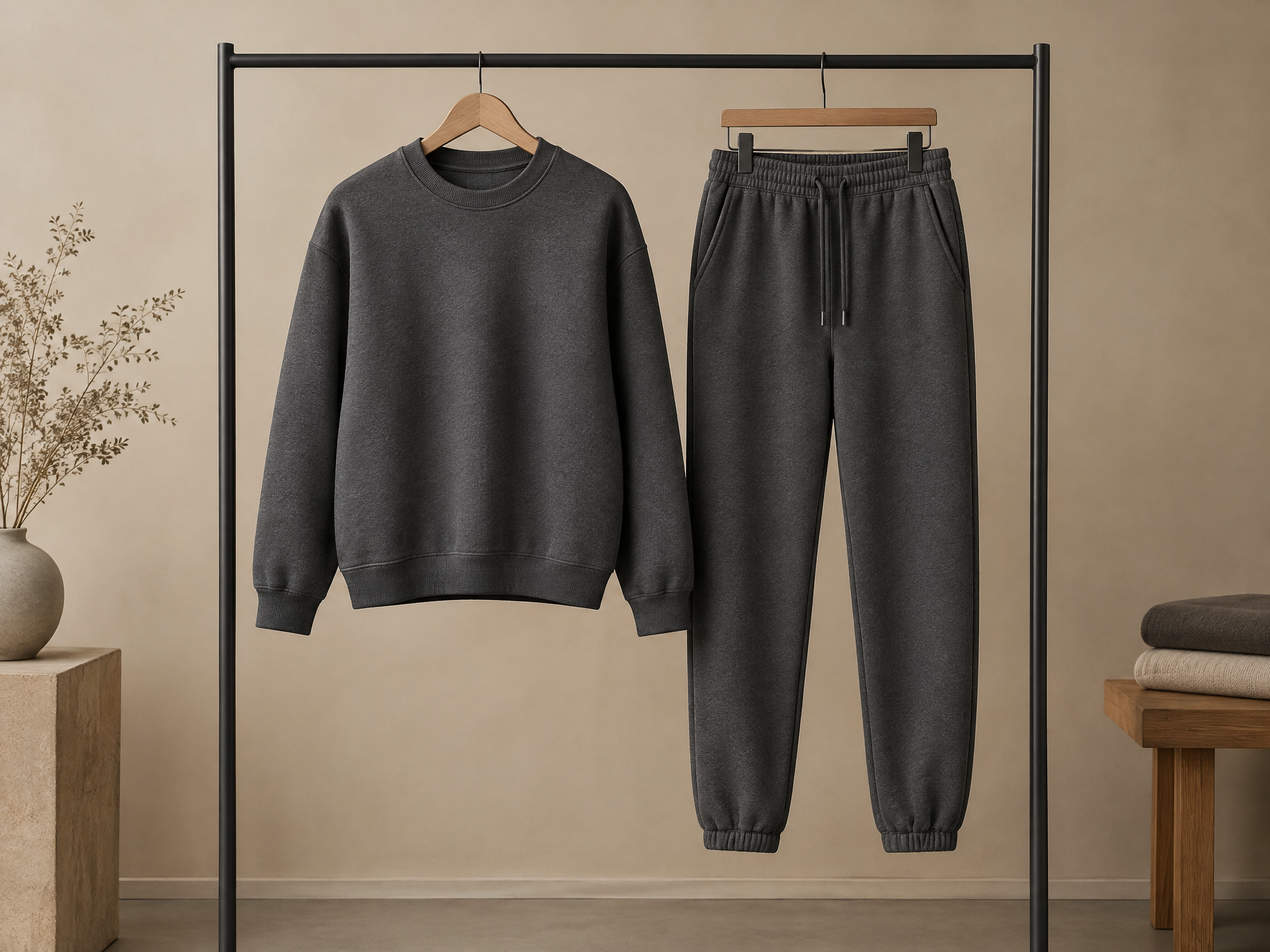
1. Define the product before requesting a quote
Start with the customer, use, and price position. A lounge set, a heavyweight streetwear tracksuit, and a performance warm-up suit may all be called sweatsuits, but they need different fabrics, construction details, and fits. Record whether the set is for adults or children, the intended season, size range, target retail price, sales channel, and expected order quantity. These choices help a factory estimate materials, labor, sampling, and production timing more accurately.
Choose a clear design direction for both pieces: sweatshirt type (crewneck, hoodie, or zip-up), pant silhouette, rise, leg opening, pockets, cuffs, waistband, drawcord, branding, and any paneling. Decide whether the garments should match exactly or use coordinated details. A written brief reduces ambiguity and gives the designer, pattern maker, and manufacturer the same reference.
2. Choose fabric and trims for comfort and performance
Fabric choice shapes the hand feel, warmth, drape, durability, and cost of a sweatsuit. Common options include cotton jersey or fleece, cotton-polyester blends, French terry, and brushed-back sweatshirt fleece. French terry usually has looped backing and a lighter, less insulating feel; brushed fleece has a soft, raised inside that can feel warmer. Ask for the fabric composition, usable width, weight, shrinkage behavior, color availability, and care requirements—not just a fabric name.
Request a physical swatch and assess it after washing when appropriate. Check softness, stretch and recovery, surface pilling, color consistency, and how the fabric behaves at seams. Match rib for neckbands, cuffs, and waistbands, and select compatible thread, zippers, eyelets, drawcords, labels, and packaging. A heavier body fabric may need stronger stitching or different rib proportions. If sustainability matters to your customers, ask suppliers for specific, verifiable material and process documentation; do not rely on broad environmental claims alone.
3. Build a tech pack and confirm fit
A tech pack turns a concept into production instructions. Include front, back, and detail drawings; a bill of materials; fabric and trim specifications; color references; artwork placement and size; stitching and construction notes; label and packaging requirements; and a measurement chart with tolerances. Give the sweatshirt and sweatpants separate specifications, then identify which colors, materials, and branding elements must match across the set.
Develop a sample before bulk production. Review the fit on an appropriate wearer or dress form, checking movement, ease, sleeve and inseam lengths, rise, pocket placement, cuff recovery, and how the two pieces look together. Record corrections clearly and request another sample when important changes are made. Approve a final reference sample and signed-off specifications so both sides can compare bulk garments against an agreed standard.
4. Cutting, sewing, finishing, and quality control
Once materials and samples are approved, the factory prepares patterns and lays fabric for cutting. Accurate spreading and marker planning help control fabric use, while checks for shade variation and fabric defects help prevent mismatched panels. Cut components are bundled by size and color, then sewn in an organized sequence. Depending on the design, operations may include joining shoulder and side seams, attaching sleeves, setting rib, sewing pockets, assembling waistbands, inserting drawcords, and applying labels or decoration.
Finishing may include thread trimming, pressing or steaming, garment measurement, folding, and packing. Quality checks should happen during production as well as at final inspection. Review seam strength and consistency, skipped stitches, puckering, symmetry, measurements, shade matching between top and pants, print or embroidery placement, cleanliness, and packaging accuracy. Define acceptable tolerances and inspection points before production begins. A documented checklist makes decisions more consistent than relying on a general instruction to make the garments ‘high quality.’
5. Choose a manufacturing partner and plan the timeline
Compare manufacturers on relevant knitwear experience, communication, sampling process, production capacity, minimum order quantity, quality systems, and transparency about materials and subcontracting. Ask who sources the fabric, how color approval works, what is included in the quote, how changes are priced, and how defects are handled. Request references or examples of comparable work where available. The lowest quote is not necessarily the lowest total cost if unclear specifications lead to rework, excess waste, or missed launch dates.
Build a realistic schedule with time for design finalization, fabric and trim sourcing, sampling, revisions, bulk production, inspection, and shipping. Lead times vary with material availability, order size, factory workload, and the number of sample rounds, so ask the chosen partner for a written estimate rather than assuming a universal timeline. Confirm the order quantity by size and color, payment milestones, shipping responsibilities, packaging, and the process for approving production.
6. Understand cost drivers and reduce avoidable risk
Sweatsuit manufacturing cost is influenced by fabric composition and weight, garment complexity, number of colors, trims, prints or embroidery, order quantity, labor, packaging, quality requirements, and transport. A matching top-and-pants set contains more material and operations than a single item, and custom-dyed fabric or complex branding can add setup time. Ask for a quote that separates, where possible, sampling, materials, decoration, garment production, packaging, and delivery. This makes trade-offs easier to evaluate without sacrificing essentials such as fit and seam quality.
Reduce risk by freezing the specification before bulk cutting, limiting late design changes, approving a production sample, and keeping written records of color and measurement decisions. Plan for shrinkage and care-label requirements based on the selected materials and the markets where the product will be sold. Have relevant product-safety, labeling, and import obligations reviewed for your destination market; requirements differ by jurisdiction and product category. A manufacturing guide is not a substitute for local compliance advice.
Frequently asked questions
What is the first step in sweatsuit production?
Define the intended customer, product type, target price, quantity, and design details. Then prepare a brief or tech pack so a manufacturer can assess the materials, construction, and sampling needs.
Which fabric is best for a sweatsuit?
There is no single best fabric. French terry, brushed fleece, cotton, and cotton-poly blends offer different warmth, weight, feel, care, and cost. Compare swatches and confirm composition and performance with your supplier.
Do I need a sample before placing a bulk order?
A sample is strongly recommended. It lets you check fit, materials, construction, color, and decoration before approving the standard for bulk production.
What information should I send to a tracksuit manufacturer?
Send design drawings, a size chart, fabric and trim requirements, colors, artwork files and placement, construction notes, quantities by size and color, packaging needs, destination market, and target timing.
How can I improve sweatsuit quality?
Use clear specifications, test fabric and fit, approve a final sample, define measurable tolerances, and check workmanship and matching colors during production and before shipment.


Comments